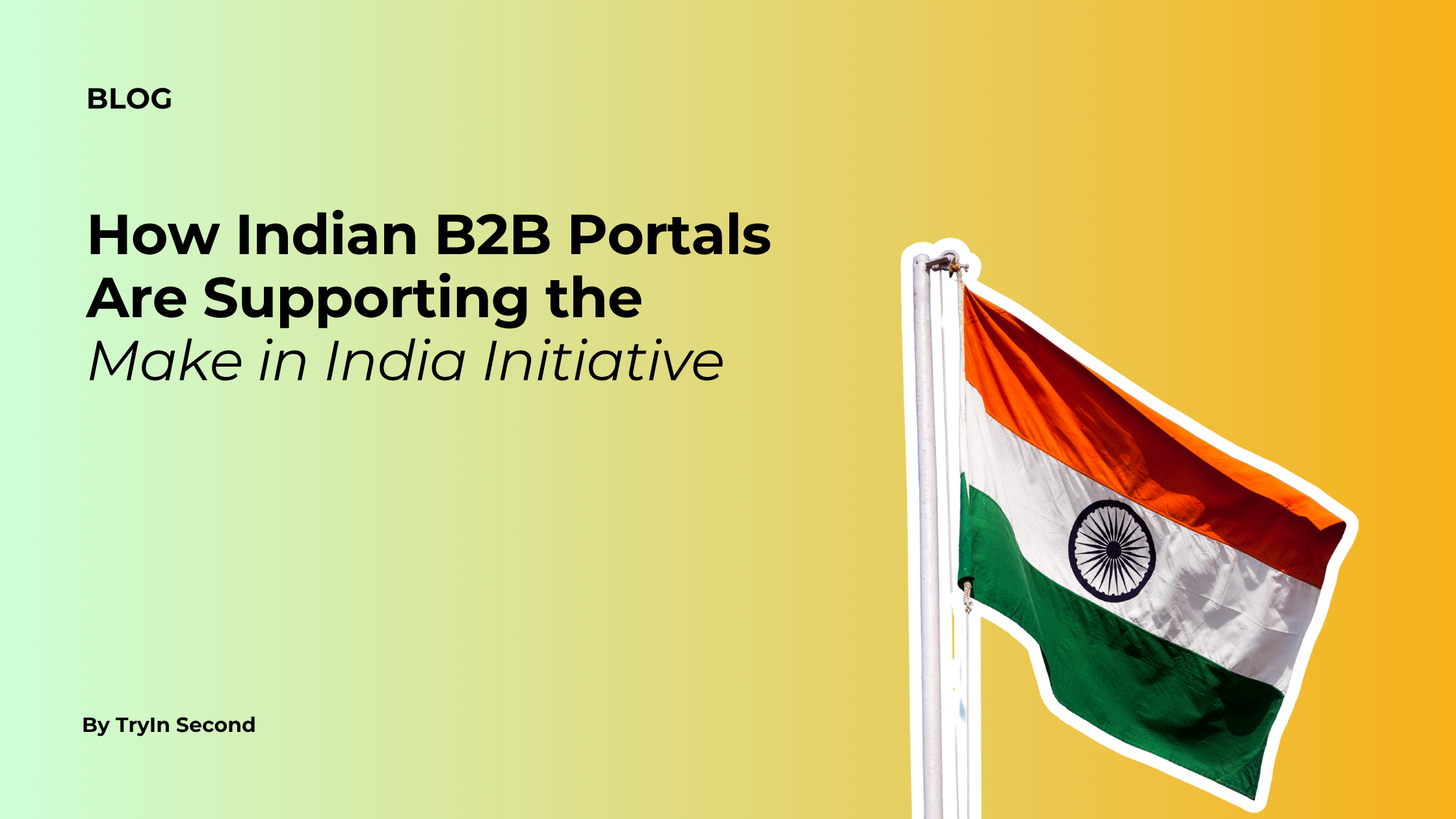
Launched in 2014, the Make in India initiative has transformed the nation’s industrial landscape — encouraging manufacturing, innovation, and self-reliance. But in today’s digital-first world, it’s not just factories and industries that power this mission — Indian B2B portals have emerged as the silent force driving this transformation online.
Platforms like TryIn Second are helping Indian manufacturers, exporters, and small businesses connect with global buyers — strengthening India’s position as a global manufacturing hub.
Let’s explore how Indian B2B portals are fueling the Make in India vision in 2025 and beyond.
1. Empowering Local Manufacturers to Go Global
One of the key goals of the Make in India campaign is to showcase Indian-made products to the world. Indian B2B portals play a critical role here by providing digital platforms where manufacturers can list their products, connect with verified buyers, and expand globally — all without needing an international office.
Platforms like TryIn Second simplify this process by:
- Offering verified buyer connections
- Providing global product visibility
- Reducing dependency on intermediaries
This digital access ensures that even small-scale manufacturers from Tier-2 and Tier-3 cities can compete on a global scale.
2. Bridging the Gap Between Buyers and Suppliers
Traditionally, Indian businesses faced challenges in connecting directly with genuine suppliers or buyers. Indian B2B portals have eliminated these barriers by creating a transparent, technology-driven ecosystem where both parties can interact, negotiate, and trade with confidence.
With features like:
- Verified supplier listings
- Secure payment gateways
- AI-based lead matching
Platforms such as TryIn Second ensure smoother transactions and reduce the risks of fraudulent trade — boosting trust in Indian products worldwide.
3. Promoting SMEs and Startups Across Industries
Small and medium enterprises (SMEs) are the backbone of India’s manufacturing sector. However, many SMEs lack the marketing resources or digital presence to reach global buyers.
Indian B2B portals fill this gap by offering:
- Free or affordable listing options
- Industry-specific product categories
- SEO visibility on global search engines
This means an SME producing textile machinery in Surat or a packaging manufacturer in Pune can be discovered by a buyer in Dubai or Singapore within minutes. Such exposure directly aligns with Make in India’s goal of empowering domestic businesses to scale globally.
4. Driving Digital Transformation in Manufacturing
In 2025, technology adoption defines competitiveness. Modern Indian B2B portals integrate tools like AI-driven lead generation, data analytics, and smart product recommendations — helping suppliers make better business decisions.
TryIn Second, for instance, enables businesses to:
- Track buyer behavior and preferences
- Analyze which products get the most inquiries
- Optimize listings for better visibility
This data-driven approach not only helps manufacturers stay competitive but also supports the Make in India mission through digital innovation and efficiency.
5. Encouraging Export Growth and Self-Reliance
The Make in India initiative aims to make India a global export leader. Indian B2B portals contribute directly to this goal by connecting exporters with international importers and wholesale buyers.
These platforms simplify trade documentation, logistics, and communication — making it easier for Indian businesses to expand their export operations. By eliminating middlemen and reducing trade costs, B2B platforms are enabling true economic self-reliance, one deal at a time.
6. Building Trust and Brand India
Every successful B2B transaction adds credibility to India’s manufacturing image. Verified listings, quality product displays, and transparent communication channels help build global trust in the “Made in India” label.
TryIn Second, for example, ensures only verified businesses are listed — maintaining the quality and reputation of Indian suppliers. This contributes directly to India’s image as a dependable manufacturing partner in the global marketplace.
7. Fostering Collaboration Across Sectors
Another overlooked advantage of Indian B2B portals is their ability to connect industries beyond trade. Manufacturers, logistics providers, packaging firms, and service suppliers can all collaborate under one digital ecosystem.
This interconnected network fosters innovation, efficiency, and collaboration — strengthening the foundation of the Make in India initiative through cross-sector partnerships.
Final Thoughts
The future of the Make in India mission lies in the digital world — and Indian B2B portals are at the heart of it. They’re empowering local manufacturers, promoting exports, and building a strong, self-reliant economy driven by technology and trust.
As businesses continue to embrace online trade, platforms like TryIn Second are not just connecting buyers and suppliers — they’re connecting India to the world.
Key Takeaway:
Indian B2B portals are the new engines of growth for the Make in India initiative. By empowering local businesses to go global, they’re ensuring that India’s manufacturing story continues to shine on the world stage.