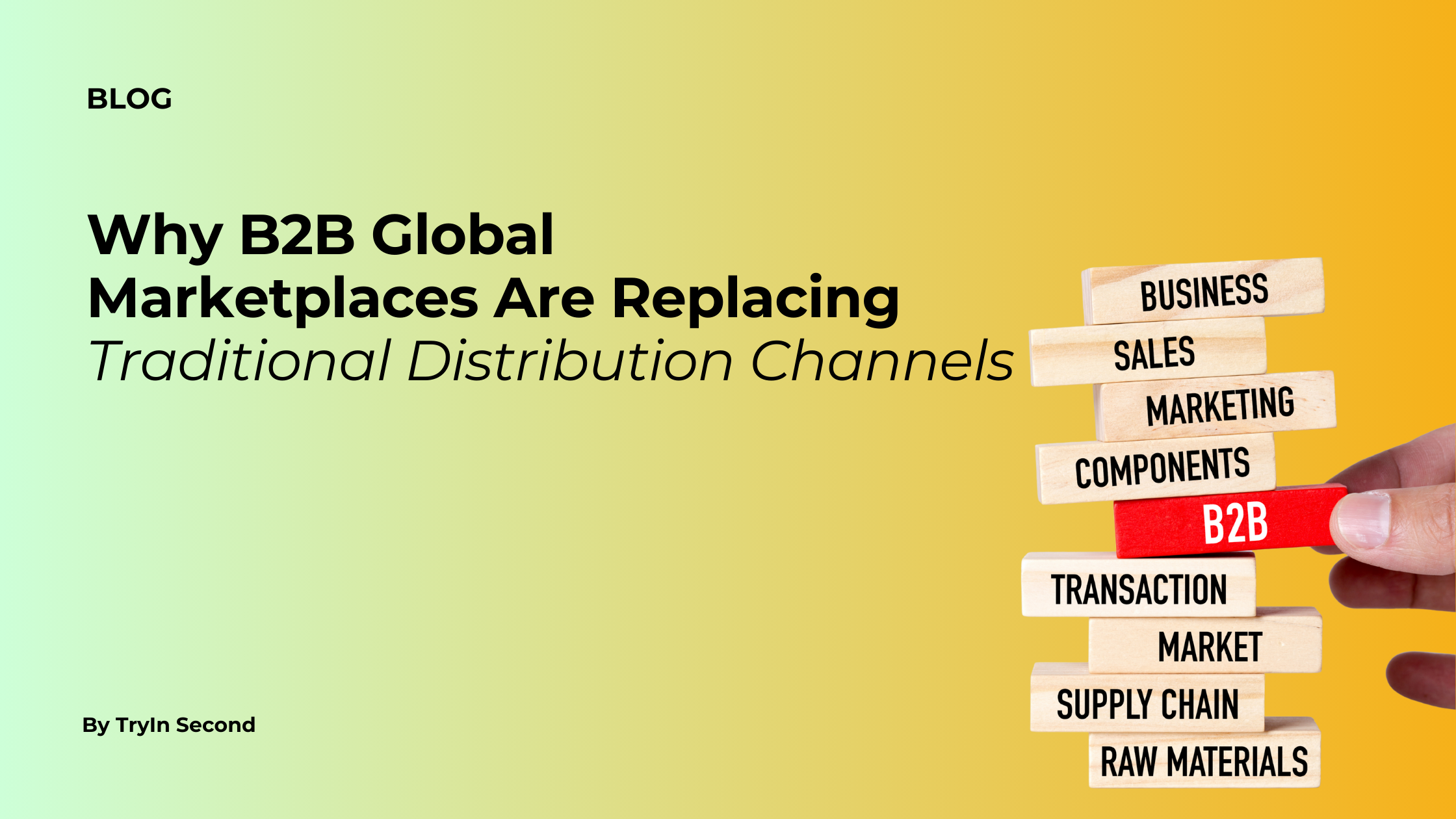
In the last decade, the way businesses buy and sell products has transformed dramatically. Traditional distribution channels—filled with intermediaries, delayed processes, and limited visibility—are quickly being replaced by B2B global marketplaces that offer speed, transparency, and direct access to worldwide buyers and suppliers.
With rising demand for digital trade, cross-border sourcing, and operational efficiency, companies across all sectors are migrating to digital B2B ecosystems. These platforms are no longer optional—they’re becoming the backbone of modern supply chains.
In this blog, we break down why B2B global marketplaces are overtaking traditional distribution models and how businesses can benefit from this shift.
1. Direct Access to Global Buyers and Suppliers
Traditional channels depend on distributors, agents, and wholesalers. While useful, they often slow the process and reduce profit margins.
A B2B global marketplace removes unnecessary layers by connecting businesses directly with verified international buyers and suppliers.
✔ Instant access to multiple markets
✔ Wider product categories
✔ Faster business matching
This direct link saves both time and money while expanding market reach.
2. Lower Costs and Higher Margins
Every intermediary in a traditional distribution chain increases the cost of goods. Logistics delays, manual negotiations, and limited vendor options also drive prices up.
Global B2B marketplaces dramatically reduce these hidden costs:
- Lower procurement expenses
- No middlemen commissions
- Transparent pricing
- Direct negotiation with suppliers
The result? Higher profits and a smoother procurement strategy.
3. Faster and Digitized Procurement Cycle
Manual procurement workflows are slow, prone to errors, and heavily dependent on paperwork.
In comparison, B2B global marketplaces offer:
- Real-time product listings
- Instant RFQs and quotations
- Automated order tracking
- Digital communication tools
This dramatically accelerates sourcing and reduces lead times—an essential advantage in fast-moving industries.
4. Verified Suppliers Build Trust and Reduce Risk
One of the biggest challenges in traditional distribution is the lack of supplier transparency.
Modern B2B global marketplaces ensure trust through:
- Verified supplier profiles
- Compliance information
- Transparent reviews and ratings
- Secure communication
This level of reliability is unmatched in old distribution models and gives buyers confidence in every transaction.
5. Greater Scalability for Businesses
Traditional channels limit how quickly a business can grow due to geographic constraints and manual processes.
A B2B global marketplace helps companies scale effortlessly:
- Access international buyers & suppliers anytime
- Expand into new markets without physical presence
- Increase trade volume without extra manpower
Digital platforms remove growth barriers and support long-term expansion.
6. Data-Driven Decision Making
Traditional channels rarely provide accurate data or market insights.
Digital marketplaces empower businesses with real-time analytics:
- Product demand trends
- Supplier performance reports
- Pricing comparisons
- Market behavior analytics
This data helps companies make smarter decisions and optimize their supply chain strategy.
7. Better Transparency Across the Supply Chain
Lack of transparency often leads to delays, disputes, and inefficiencies in traditional channels.
B2B global marketplaces offer complete visibility:
- Real-time updates on orders
- Clear communication channels
- Digital records
- Tracking from inquiry to delivery
This transparency builds trust and strengthens business relationships.
8. Seamless Integration With Modern Business Tools
Traditional distribution rarely allows integration with ERP, CRM, or inventory management systems.
Digital B2B marketplaces, however, are built for integration, enabling:
- Automated data sync
- Smooth inventory management
- Better forecasting
- End-to-end tracking
This reduces manual workloads and enhances efficiency.
9. Supports Cross-Border Trade Regulations
Expanding internationally is complicated when using traditional distribution.
Modern global marketplaces simplify this via:
- Compliance guidance
- Import/export documentation support
- Trade regulation insights
This makes global trade more accessible for SMEs and startups.
10. Future-Ready and Built for Digital Transformation
Traditional channels are becoming outdated as global commerce shifts online. With AI, automation, and digital sourcing advancing rapidly, B2B global marketplaces are the future of business trade.
Companies that adopt digital marketplaces early gain a competitive edge with:
- Faster operations
- Lower risk
- Higher visibility
- Wider global reach
Conclusion
The shift from traditional distribution channels to B2B global marketplaces is not just a trend—it’s a strategic necessity for businesses aiming to thrive in the global economy. These platforms deliver unmatched benefits in cost reduction, speed, transparency, and scalability.
Platforms like TryIn Second empower businesses in UAE, MENA, and beyond to connect with verified global suppliers and expand confidently into international markets.
Digital is the future—start leveraging it today.